
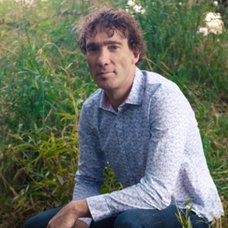
Jens Hegg
- Assistant Professor, Biology
How do animals, in the midst of a patchy and variable landscape, balance the resources and risks they know in the now, against the unknown risks and rewards in a future they cannot know?
I am interested in how animals solve this balancing act. Migratory species must not only balance risks and rewards through time, but also across space as they make lengthy migrations. Rewards like faster growth or higher survival rarely occur across the entire migratory path, nor do the risks. In fish, where most of my research is focused, these important drivers of migration behavior are often hyper-local, related to environmental conditions and community ecology at the scale of individual tributaries or river reaches.
To uncover these ecological interactions I use field research methods in addition to isotopic records stored within fish themselves. Hard parts such as teeth, scales, or otoliths (ear stones) record a detailed record of fish movements and life-history. Recovering them allows us to understand details of fish migration that are otherwise hidden.