
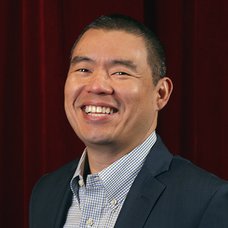
Dung Q. Tran
- Associate Professor, Organizational Leadership
Dr. Dung Q. Tran is an Associate Professor of Organizational Leadership in the School of Leadership Studies at Gonzaga University in Spokane, Washington, U.S.A., and an Adjunct Faculty member in both the Ph.D. in Leadership Studies as well as the M.A. in Theology and Leadership programs at Gonzaga. Prior to relocating to the Inland Northwest, Dr. Tran taught doctoral, graduate, and undergraduate courses in Team Development, Organizational Integrity, and Ignatian Leadership at multiple Catholic and Jesuit universities in Philadelphia, Seattle, and Los Angeles.
Working at the nexus of organizational leadership and the Catholic, Jesuit, and humanistic educational traditions, Professor Tran is interested in how spiritual, ethical, and values-based perspectives shape leader identity development and leadership theory and practice. Dr. Tran is second editor of Servant-Leadership and Forgiveness: How Leaders Help Heal the Heart of the World (SUNY Press, 2020). He has also authored or co-authored articles and book chapters on Pope Francis’ rhetoric of reform, Jesuit-informed casuistry, the inclusive and relational leadership of Popes John XXIII and Francis, Jesuit higher education leadership, the role of forgiveness in the Catholic clergy sexual abuse scandal and cover-up, workplace spirituality, Ignatian discernment, Benedictine spirituality, and, the intersection of sport and servant-leadership in the lives of racecar driver Takuma Sato and religious Sister Rose Ann Fleming, S.N.D.deN.
Dr. Tran’s peer-reviewed work has appeared in Philosophy of Management; the International Journal of the History of Sport; Humanistic Management Journal; the International Journal of Servant-Leadership; Communication Research Trends; the Journal of Catholic Education; the Asian-American Theological Forum; and in the following anthologies: Sacred Rhetoric: Discourses in Identity and Meaning (Fairleigh Dickinson University Press, 2024); The Routledge Companion to Leadership and Change (Routledge, 2023); Perceptions of East Asian and North American Asian Athletics (Palgrave, 2022); Reimagining Leadership on the Commons: Shifting the Paradigm for a More Ethical, Equitable, and Just World (Emerald, 2021); The Palgrave Handbook of Workplace Well-Being (Palgrave, 2021); The Routledge Companion to Mindfulness at Work (Routledge, 2021); New Horizons in Positive Leadership and Change: A Practical Guide for Workplace Transformation (Springer, 2020); Evolving Leadership for Collective Wellbeing: Lessons for Implementing the United Nations Sustainable Development Goals (Emerald, 2019); The Palgrave Handbook of Workplace Spirituality and Fulfillment (Palgrave, 2018); and Breaking the Zero-Sum Game: Transforming Societies Through Inclusive Leadership (Emerald, 2017).
Additionally, Professor Tran has presented his research at the Academy of Management (AOM); the International Leadership Association (ILA); the International Association of Jesuit Business Schools (IAJBS); the International Thomas Merton Society (ITMS); Colleagues in Jesuit Business Education (CJBE); the National Communication Association (NCA); and Western States Communication Association (WSCA). In addition to his teaching and scholarship, Dr. Tran contributes to several initiatives associated with the Association of Jesuit Colleges and Universities. He is currently a member of the National Seminar on Jesuit Higher Education, and serves as Web and Associate Editor of Conversations on Jesuit Higher Education. Dr. Tran is also a past Vice President of the Board of Directors for Alpha Sigma Nu, the international honor society of Jesuit colleges and universities.
The son of Vietnamese refugees, Professor Tran earned his doctorate in Leadership Studies at Gonzaga University and completed his master’s degree in Theological Studies – with emphases in Spirituality and Catholic Higher Education – at the Jesuit School of Theology of Santa Clara University. Dr. Tran also holds Washington and California Teaching Credentials in History, a master’s degree in Secondary Education, and two bachelor’s degrees in Communication Studies and Theology from Loyola Marymount University.