
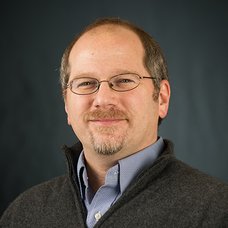
Andrew L. Goldman
- Professor, History
As a field archaeologist, Dr. Goldman has worked at numerous ancient sites in the Mediterranean, including Çatal Höyük, Oinoanda, Kerkenes Dag, Gordion and Sinop. His chief area of interest is the material culture of the Roman world, and he has published on Latin inscriptions, carved gemstones, Roman military equipment, Roman cemeteries and funerary practices, Roman pottery and trade routes, as well as other related topics. His research has been supported by grants from Harvard’s Loeb Classical Library Foundation, the National Endowment for the Humanities, the American Research Institute in Turkey, and Gonzaga University.
Beginning in 1992, Dr. Goldman joined the excavation team at ancient Gordion in central Turkey, where he studied the economic, military and social history of the small Roman-period settlement that flourished there between the 1st and 5th centuries A.D. With the support of grants from the Loeb Foundation at Harvard University, he directed excavations exploring the Roman-period settlement and its cemeteries in 2004-05, revealing for the first time material evidence (e.g., armor, weapons, barracks buildings) that indicated Roman Gordion was a minor military base during the 1st and 2nd centuries. The base, which is the first site of its type ever to have been investigated in Turkey, served as a collection and communications node along a major Roman highway, a road station (statio) that was something akin to a rural state police base crossed with a Pony Express post.
Dr. Goldman’s most recent projects are located in Sicily and the Black Sea region. In 2013, he was invited to publish the Roman military equipment recovered from the Mediterranean seabed near the Aegates (modern Egadi) Islands off the western coast of Sicily. The ancient helmets are part of the debris field associated with the final winner-take-all battle of the First Punic War (265-41 B.C.), as the Roman Republic and its arch-nemesis Carthage fought for supremacy over the western Mediterranean. As such, these finds represent some of the oldest known Roman military equipment ever recovered from a secure battlefield context. His work continued at this important site in October 2023, when he surveyed recent finds from the deep diving operations in Favignana and Palermo in Sicily with the cooperation of the Soprintendenza di Mare, RPM Nautical and Global Underwater Explorers/Società per la Documentazione dei Siti Sommersi.
Since 2014, Dr. Goldman has served as the field director for the Sinop Kale Excavations (SKE), a long-term archaeological project dedicated to exploring the ancient city of Sinope on the Turkish coast of the Black Sea. Originally settled as a Greek colony in the late 7th century B.C., this site was one of the largest, wealthiest and most politically influential cities in the Black Sea region for over 2,700 years. The annual project has a team composed of specialists from nearly a dozen countries, and Dr. Goldman has taken undergraduates from GU and other institutions to work at the site as part of the Gonzaga-in-Sinop study abroad program. The SKE receives financial support from Gonzaga and several partner institutions, including California State University at Northridge, Queens College CUNY, and the University of Sheffield, as well as from public and private sources which include the National Endowment for the Humanities and National Geographic.